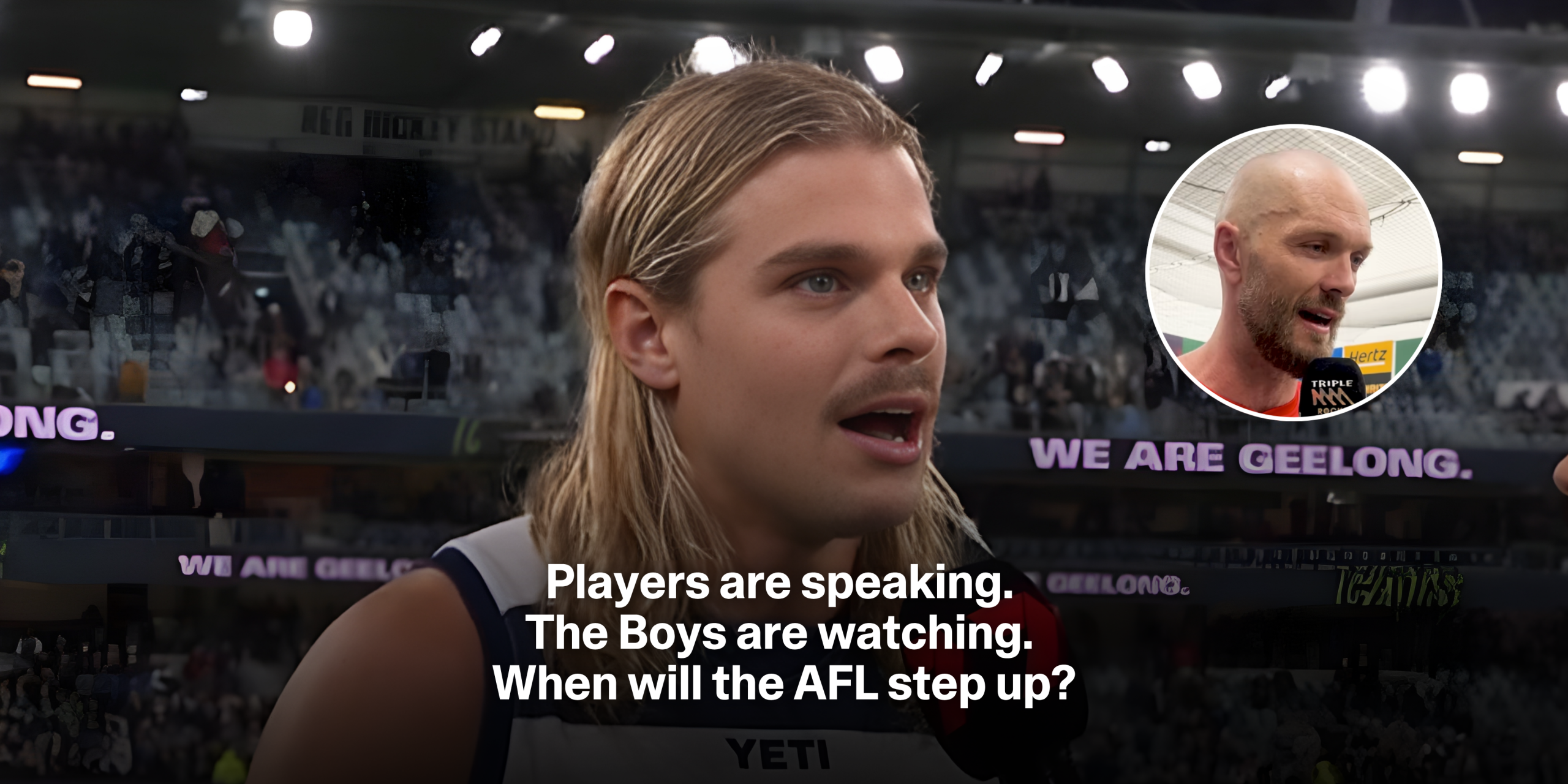
Last Friday night, Bailey Smith walked off after a big Geelong win and skipped the footy chat entirely. He said something that actually mattered.
“I don’t know if I’m out of pocket saying it, but I think it’s about time the AFL get a men’s mental health round.”
It wasn’t out of pocket. It was overdue.
Less than two years ago, Smith spent four weeks in a psychiatric facility. At the AFL Awards last year he told the room he didn’t think he’d get to the other side — and hasn’t stopped speaking about it since. That’s what made Friday night different. This wasn’t a player saying the right thing. It was a player who’d lived it, and keeps saying so out loud.
Even Max Gawn took notice. “Not many times I get around Baz’s words,” he said, “but he absolutely nailed that the other day.”
The list of why keeps growing.
In the past 18 months: Jamarra Ugle-Hagan battled suicidal thoughts, visited a health retreat, and missed an entire season. Several more players have stepped away from the game quietly, for reasons their clubs described only as personal. Last week, Jordan Dawson lost his brother Jaryd suddenly. Then Elijah Hollands suffered a mental health episode mid-game. On live television. In front of everyone.
This isn’t a run of bad luck. This is a pattern. And it’s been ignored for too long.
A mental health round isn’t just a ribbon. It’s the AFL using the biggest platform men’s sport has in this country to say: enough. We see this. We’re not looking away anymore.