DP: What were your first impressions of The Man Cave?
JP: I was dubious. The name made me worry. What’s this mean? What are they going to say to these boys?
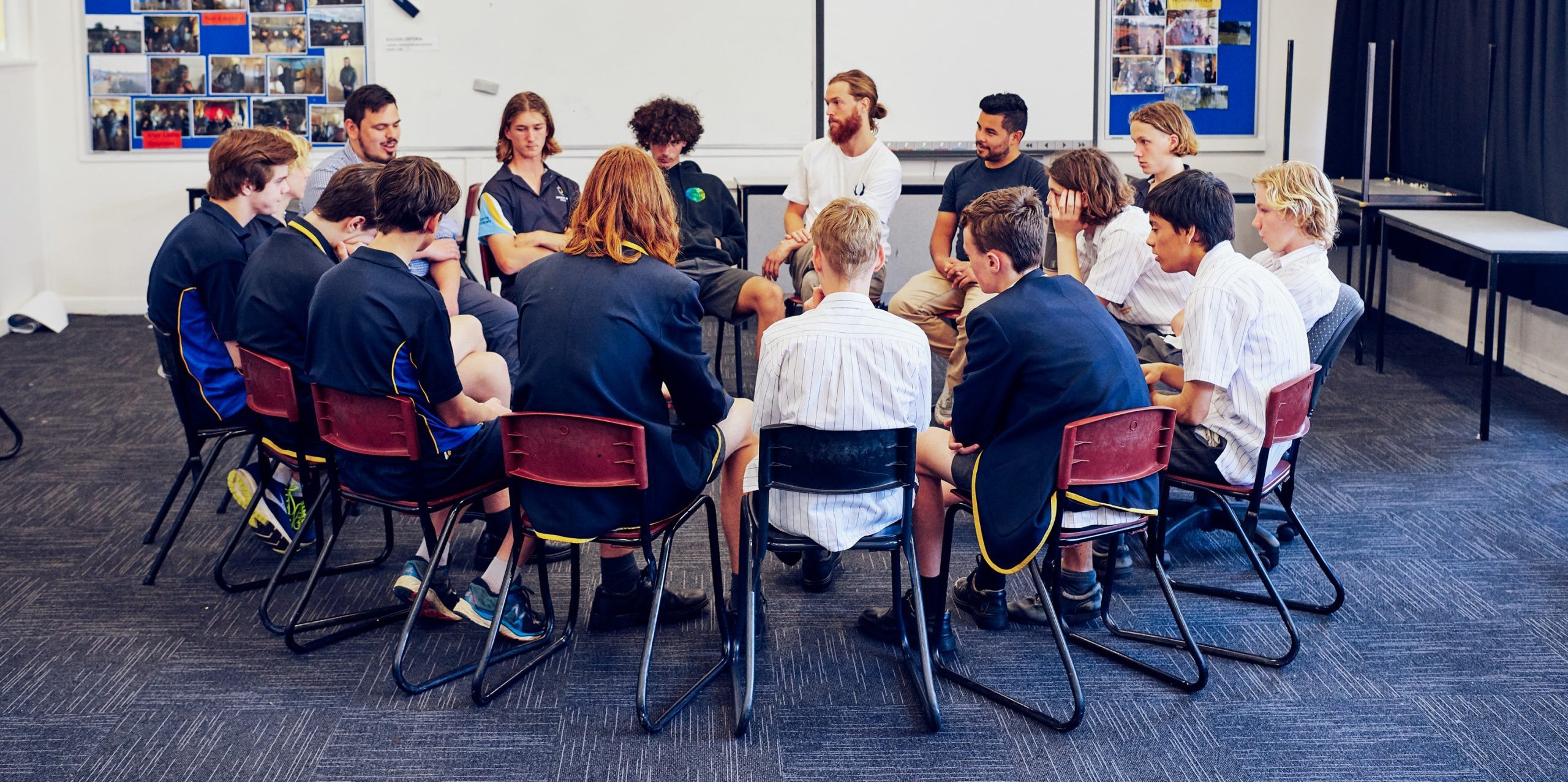
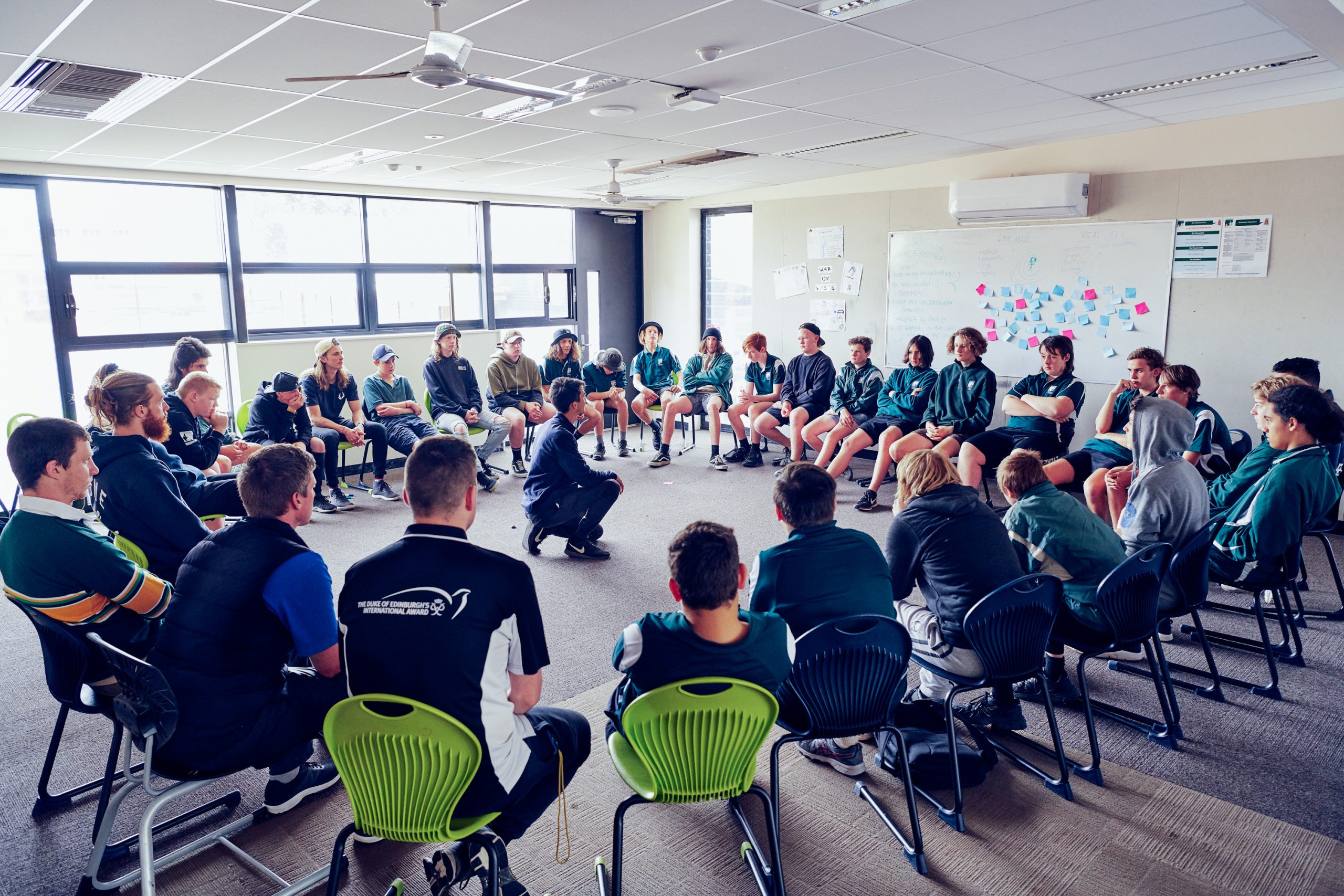
When I sat and watched, what I really appreciated was the way they used the space. As they’re talking with the young men, ‘this is our Man Cave, where we’re going to talk about some important stuff’. I was absolutely blown away by the professionalism of the young men running the program and the way they addressed misogyny and suicide risk.
It set the scene really well. Good men’s behaviour change work is intervening in an open and honest way with respect, using an invitational approach. So if I come in and tell this bloke, ‘you can’t do this, you shouldn’t do that’, all of a sudden I’m asserting my moral belief system onto him and recreating the same power dynamics that we’re trying to undo.
Good men’s behaviour change comes in from the side and says, ‘hey, I can see that this is important to you. Do you want some help shifting your behaviours to align with your values?’
DP: Where do preventative programs that work with teenage boys like The Man Cave fit into this?
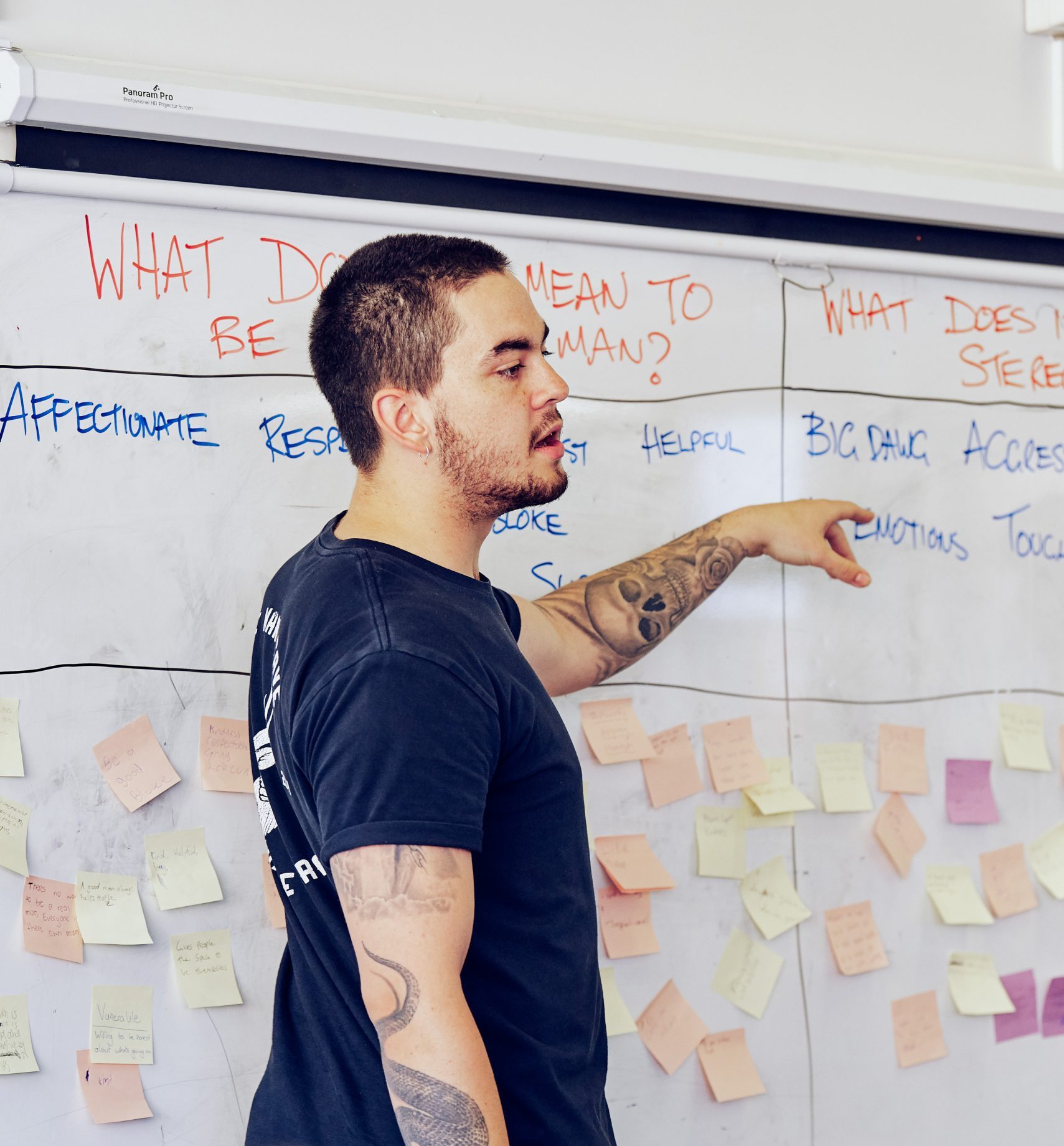
JP: The Man Cave program is 100 per cent domestic violence (DV) prevention. It might not be what you’re aiming to do, but it’s what you are doing. We know from the Man Box study that there are two emotions we’re allowed to feel as men: happy or angry. The Man Cave expands on that. When men have better emotional literacy, they can process things more appropriately.
If the only tool you’ve got is a hammer, then every problem looks like a nail. And we’re dealing with men who only have hammers. We want to give them these other tools. And so I saw the emotional literacy tools and the invitations to emotional regulation as fantastic, because that’s a massive part of the work that we need to do as a community.
The other thing that I think was really good was bringing attention to dynamics in the space and the power play. What Man Cave is doing is bringing attention to the power dynamics in the room, and for men to tune into that and pay attention to, who’s the shot caller in the room, who’s the one with the most influence. I think that’s got so much potential for future relationships.
The program also touches on suicide prevention. We know that 75 per cent of all suicides are men, and that’s because of Man Box attitudes, a lack of emotional literacy, fear of vulnerability. All those same things that drive domestic violence, that make men abuse and hurt women, are the same things that make men abuse and hurt men, including themselves.
DP: Why is shame harmful when it comes to violence prevention work?
JP: We need to invite men to lean into the guilt, but not take on shame. Guilt can help affect change, shame makes you retreat. If I walk into a room with you, Daniel, and I step on your toes, guilt would make me say, ‘Daniel, I’m really sorry. I didn’t mean to hurt you. That’s not my values. I’ll be more careful next time. Is there anything I can do to help?’ That’s guilt, and it’s a really prosocial thing.
Shame, on the other hand, would be for me to walk into the room, step on your toes and say, ‘well, what did you expect? You should have moved your feet out of the way, because I’m a fucking toe crusher. All I do is crush toes. Dad was a toe crusher, I’m a toe crusher, and my kid will be a toe crusher. There’s no point changing. You need to look out for me’.
We need to encourage men to sit with that really, really uncomfortable feeling of guilt and make them feel safe enough to do it, but at the same time, not give them an excuse that justifies, minimises or blames their behaviour on anything else. So you have to sit in that guilt-accountability space, let them soak in it, without taking on shame and labelling themselves.
DP: What are the biggest risk factors you’ve seen in men you’ve worked with?
JP: To me, the biggest influence of domestic violence is victimhood mentality. We’re working with men who feel as though their family is at risk, and they think the only way to preserve their family is with violence. And so the victimhood is the most dangerous thing, because when someone feels threatened, that’s when they use violence.
And so what you find is when you work with these men, is they are they feel inadequate, they feel vulnerable, or they felt vulnerable in the past, and they’re terrified of happening it again.
So what they’ll do is they put all that emotional responsibility on the shoulders of their partner and say, make me feel worthy. And she has to work double time over time to make sure that he feels worthy.
That fear of vulnerability and that victim stance is is the most dangerous thing, which is why programs that can help boys improve their relationships with vulnerability from a young age, so that they don’t snowball into more concerning behaviours when they become adults, are so essential.
Daniel is a Lead Facilitator and Communications Coordinator at The Man Cave. Joel Palmer is a men’s behaviour change specialist and his LinkedIn profile can be found here.
Published Xxx May, 2025.