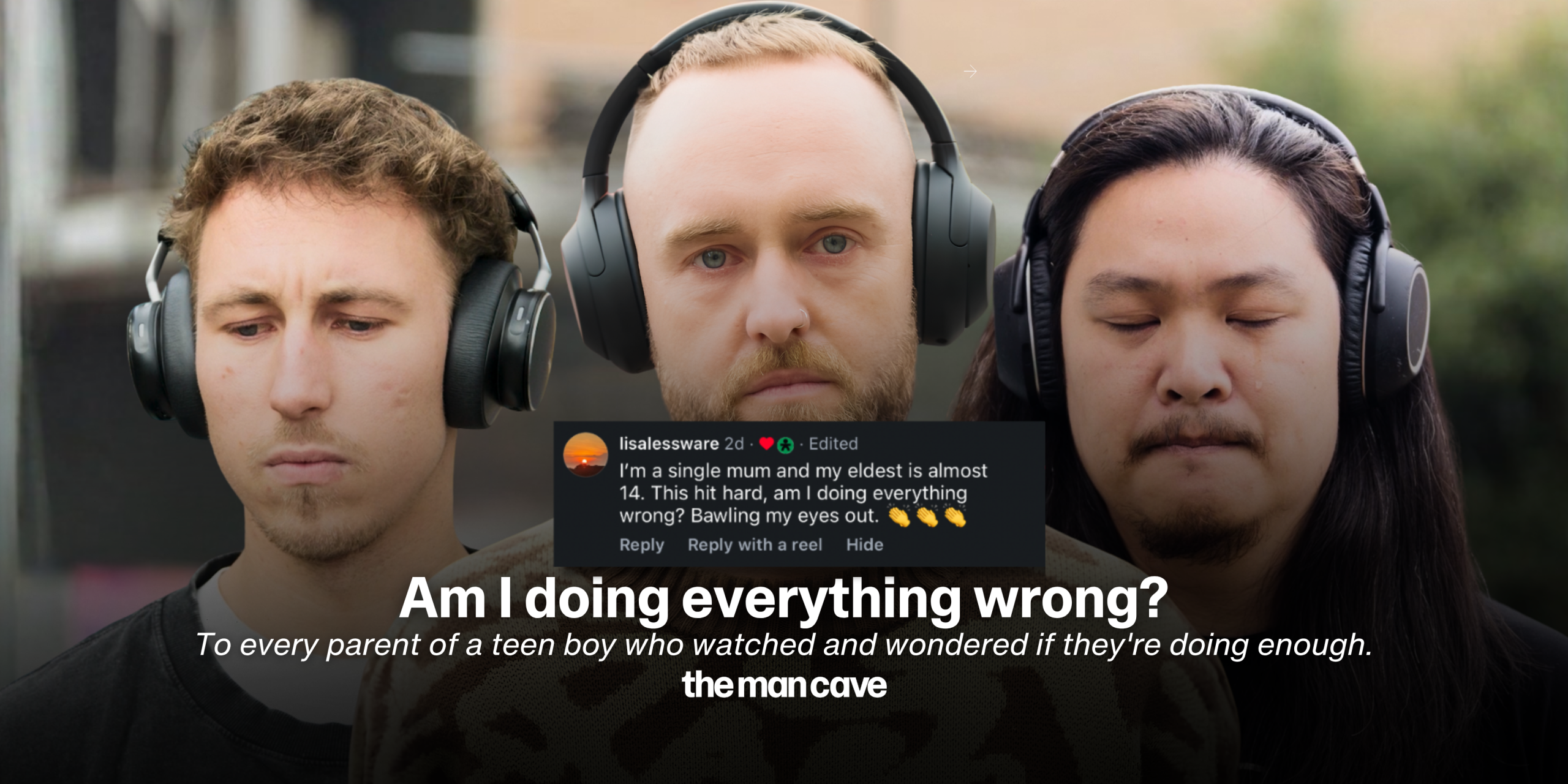
To every parent of a teen boy who watched and wondered if they’re doing enough.
We posted a video of men listening to the anonymous post-it notes teen boys write in our workshops. The comments and DMs from parents came flooding in.
The messages were all a little different. But underneath them, the question was the same.
Am I doing enough?
That told us this needed to be a proper post.
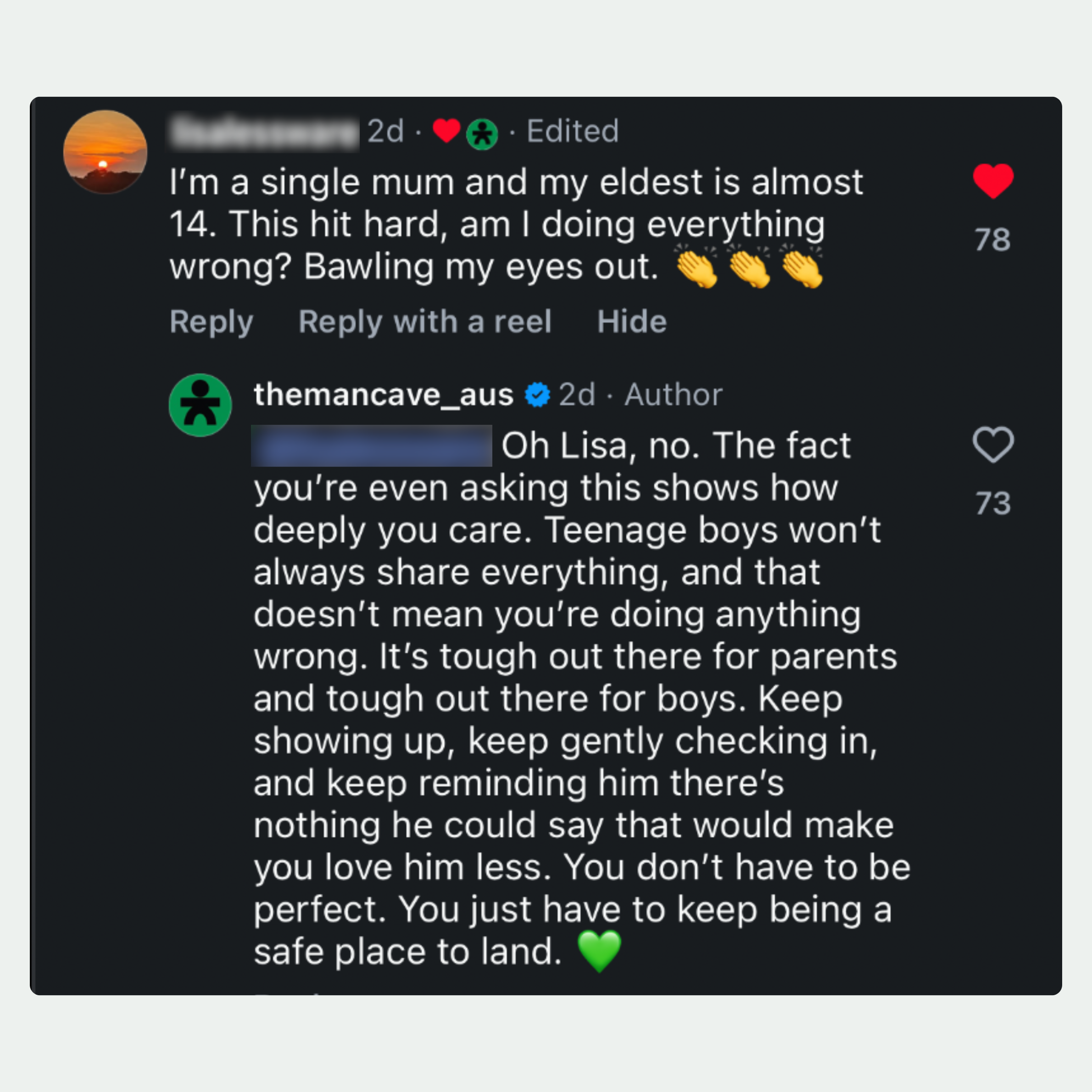
Here’s what we said to one mum who reached out:
1. Deep listening
Not jumping in. Not fixing. Just sitting with him and letting him get it out.
Most of the time he’s not looking for a solution. He just needs space to share. He needs someone who asks and then actually waits for the answer. He needs to feel like the truth won’t cost him something. That if he says “I’m not okay” the room won’t collapse.
After he does share, try this: “Is there anything you need from me right now?”
That one question changes everything. Because it tells him you’re here for what he needs, not what makes you feel better.
2. Stay curious
Seek to understand before being understood.
He needs to know you’re curious about him, not just worried about him.
If he says something that worries you, don’t shut it down. Get curious about it. Ask why. And then ask why again. Gently keep pulling the thread until he starts unpacking his own thinking.
“What do you like about that?”
“Where do you think that idea comes from?”
“How do you reckon someone else might feel about that?”
The goal isn’t to catch him out. It’s to help him think critically on his own. That skill will serve him long after any single conversation.
3. Lead by example
The most powerful thing you can do is go first.
When you share something you’re finding hard, something real, not performed, you show him that this house is a place where that’s allowed. You don’t have to go deep. Just honest.
“Work’s been stressing me out this week.”
“I’ve been feeling a bit flat lately, not totally sure why.”
That’s how trust gets built. Not in one big conversation. In a hundred small moments where nothing bad happened when someone told the truth.
Boys can’t be what they can’t see. They’re watching how we handle stress, conflict, failure and emotion. Whether we like it or not, we’re role models.
So if you want him to be open, are you modelling openness? If you want him to take accountability, are you showing him what that looks like when you get it wrong?
4. Lean on your village
If you’re struggling and he’s not listening to you, that’s not a failure. It’s just development.
Research shows that during adolescence boys start tuning out their parents a little and becoming more open to other voices. So lean on the people around him. Is there someone else in his world he looks up to? A coach, an uncle, an older cousin, a family friend?
It’s going to take more than just a parent to shift this. It takes the whole village.
And also be that person for someone else’s kid. We all have a role to play here.
And finally
You’re not going to get this right every time.
You’ll say the wrong thing. Miss the moment. Wish you’d handled it differently.
That’s okay. This isn’t one perfect conversation. It’s a hundred small, messy, unfinished ones over time. Half answers. Little openings. Snippets of truth offered slowly.
And if his behaviour isn’t okay, it’s okay to say so. Set the boundary. Follow through. That’s part of showing up too.
Deep listening. Stay curious. Lead by example. Lean on your village.
And just keep showing up.
Because you don’t have to be perfect. You just have to keep being a safe place to land.
Want support navigating this?
Our school workshops give boys the tools, language and space to open up, and we support educators and parents too. Find out more at themancave.life/programs/school-workshops/