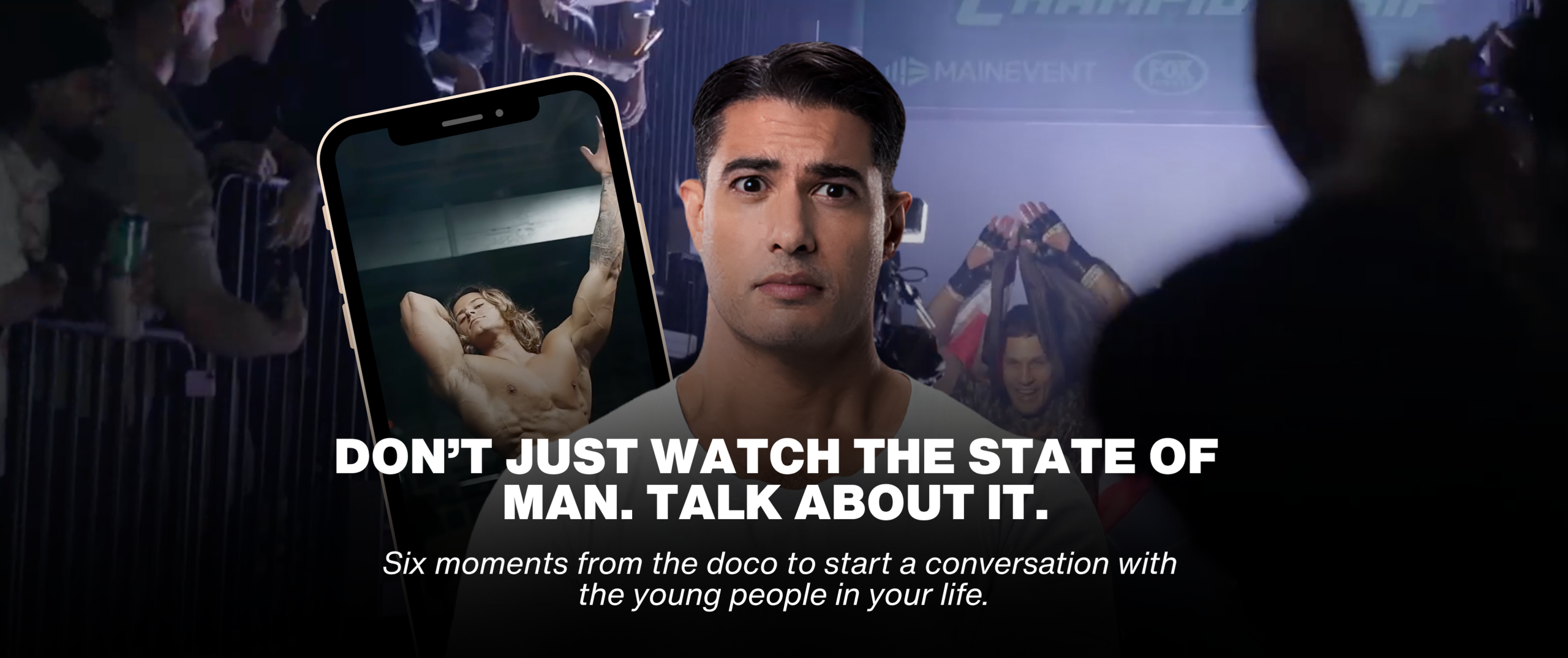
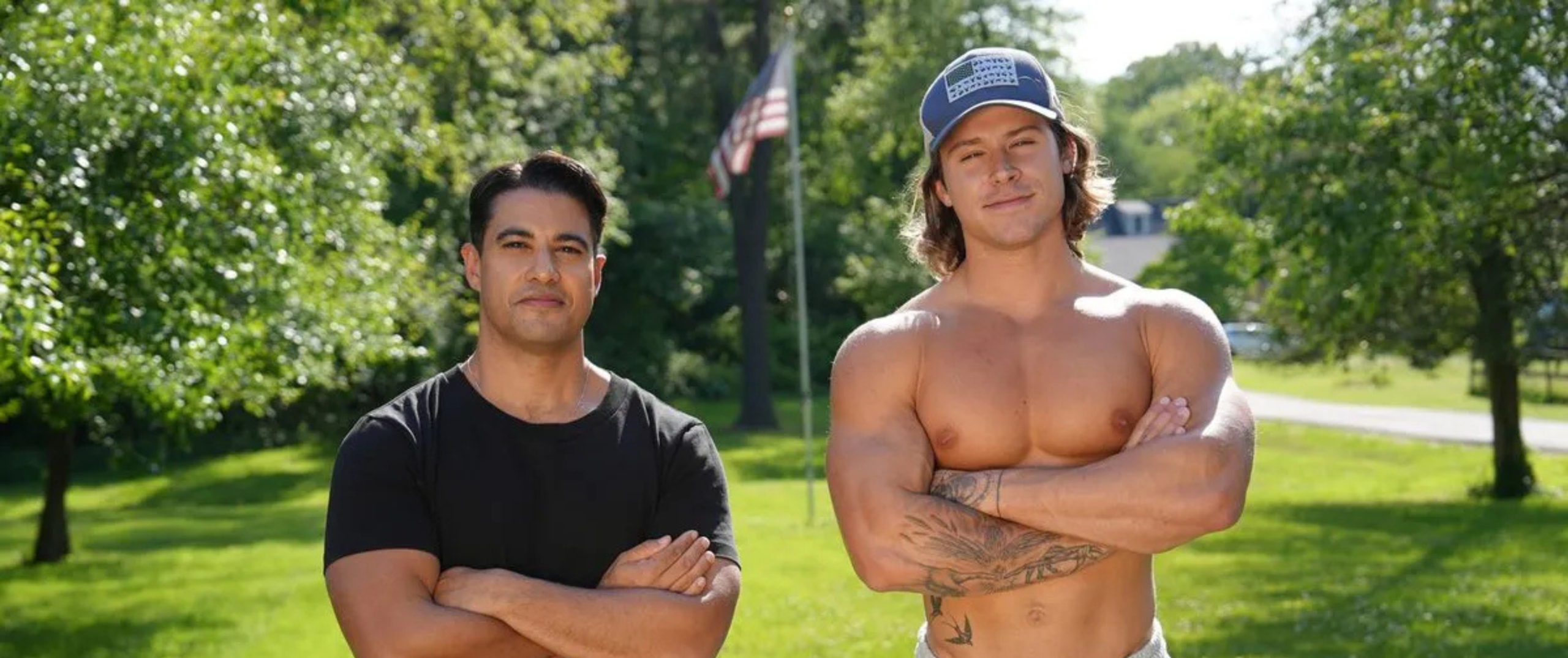
We’ve watched all three episodes. What we love is how much ground it covers, and how it makes a complex topic easy to follow: parenting boys, friendships, rites of passage, body image, violence, the lack of places for boys to just be, and the different subcultures of the manosphere.
So many moments in the show can spark a conversation, so we’ve picked a few to get you started.
Episode 1
Marc’s kids went from Pokémon videos to Joe Rogan. Nobody pressed a button.
“Has this ever happened to you?”
“What’s been showing up on your feed lately?”
“Did you go looking for it, or did it find you?”
Episode 1
Fitness influencer Alex Eubank has millions of followers and is open about using testosterone. He says one guy might watch his videos and feel motivated, while another watches the same video and feels worse about himself.
“Who do you follow for gym or body stuff?”
“How do you feel about yourself after watching them?”
“Do you reckon you’re seeing the full story?”
Episode 2
Marc never searched for it, but his test phone started serving him dating advice anyway: be an asshole, don’t talk to girls too much, care less.
“What advice about girls or relationships shows up on your feed?”
“Does any of it seem off to you?”
“Who would you actually go to for advice on this?”
Episode 3
The Boys’ Club of New York is America’s oldest boys-only youth organisation. It’s free, phones are discouraged, and there’s a pool, basketball courts and a music studio. One teenager has been going since he was eight. He calls it a second home, and says it’s where he relearned how to talk to people after the pandemic. His take: a lot of boys are struggling in silence.
“Who do you talk to when something’s on your mind?”
“Do your mates ever talk about real stuff?”
“What makes it hard to say something?”
Episode 3
At an outdoor school campus south of Sydney, Year 9 boys spend a whole term away from home with no phones. It’s a modern rite of passage. On a 24-hour solo in the bush, one boy writes an incredible poem for the group. It starts with one word: “peaceful.”
“When do you feel most at peace?”
“Do you like being outdoors?”
“What would you do with a day without your phone?”
Episode 3
After Flynn went viral for manosphere-style content, his family says it took a while to talk about it honestly. Eventually, they found the words.
“Is there anything you’ve seen online you’d find hard to tell me about?”
“What do you and your mates call this stuff?”
“If you ever posted something you regretted, would you tell me?”
As one of the teachers at the bush campus puts it, boys don’t go looking for the manosphere. They’re trying to answer big questions about who to be.
The answers they find online are often built to make them feel angry, jealous, even worthless. Thinking critically matters, but boys also need to notice those feelings and sit with them.
All 3 episodes are on ABC iview.
The series ends with a question for the men watching:
“Do you want to be the man that believes that the world and women are out to get you? Or do you want to be the man that builds something better?”
Marc Fennell, The State of Man